Chapter - 29 : Find
'Gurai roshogulla,' I made a face as we sat in the car. 'Where art thou?'
We'd woken up very early, since this was the farthest we would have to travel in our entire trip. We nibbled silently on oranges, peanuts and homemade chikki.
'Gurai roshogulla,' I proclaimed again, as we exited Bhubaneshwar.
Mama turned back. 'I'll give you a good kick right up your roshogu...'
'There's this place called Pahala, en route to Cuttack.' Aunty jumped in, saving me. 'If anyone will have those, they will. An entire line of 20-30 shops, all selling freshly made sweets. You'll love it.'
'Always lying in wait for food,' Mama narrowed her eyes at me.

By Manojiritty - Own work, CC BY-SA 4.0, https://commons.wikimedia.org/w/index.php?curid=51364577
The Indian cormorant or Indian shag (Phalacrocorax fuscicollis). This cormorant fishes gregariously in inland rivers or large wetlands of peninsular India and northern part of Sri Lanka. It also occurs in estuaries and mangroves but not on the open coast. After fishing, cormorants go ashore, and are frequently seen holding their wings out in the sun. All cormorants have preen gland secretions that are used ostensibly to keep the feathers waterproof. Humans have used cormorants' fishing skills in various places in the world. Archaeological evidence suggests that cormorant fishing was practiced in Ancient Egypt, Peru, Korea and India, but the strongest tradition has remained in China and Japan, where it reached commercial-scale level in some areas. In a common technique, a snare is tied near the base of the bird's throat, which allows the bird only to swallow small fish. Larger ones are caught in its throat, which the fisherman helps remove.
Cormorants feature in heraldry and medieval ornamentation, usually in their "wing-drying" pose, which was seen as representing the Christian cross, and symbolizing nobility and sacrifice. For John Milton in Paradise Lost, the cormorant symbolizes greed: perched atop the Tree of Life, Satan took the form of a cormorant as he spied on Adam and Eve during his first intrusion into Eden.
In some Scandinavian areas, they are considered good omens; in particular, in Norwegian tradition spirits of those lost at sea come to visit their loved ones disguised as cormorants. The symbolic liver bird of Liverpool is commonly thought to be a cross between an eagle and a cormorant.
I grinned and waited. After ten painful minutes, Pahala arrived. I teleported out of the car and was at the nearest shop before Aunty had opened the door.


She and the shopkeeper started talking, and my smile wilted. None of them made the heavenly thing, and he knew of no one else that did. He offered me a fresh one, dripping with sugar syrup. I gobbled it whole, and my smile returned.


'Well played. But tomorrow, gurai roshogulla?' I asked Aunty. 'Yes,' she said calmly. 'We'll find a place.'
We got some twenty packed for the trip and went on. I ate one everytime I thought of gurai roshogulla to keep away the sadness. After crossing Cuttack, we stopped for a proper breakfast. It was a tiny, frugal place - with medu vadas, daal vadas, rasabali and chhena poda on the menu. The sky turned fifty shades brighter as we ate silently, just observing the hubbub of the village.


We packed more chhena poda for the road, and Mama went across for some paan. 'Sweet paan, no supari,' she told him. 'No supari?' he squawked and went about making it resignedly. Me and Ma looked at each other - we'd lost all respect in his eyes.
'How much?' Mama mumbled, taking the tiny hollow betel leaf, afraid of the answer. He scowled at us, like we'd rejected his birthday present and accepted only the wrapping paper. 'One rupee,' he said dejectedly. It looked like he didn't even want to charge us.
'Err, we don't have change,' Mama said sheepishly. The shopkeeper adopted a 'you shittin me right now?' look and stared at us, until I scrambled and produced a one-rupee coin.
We walked away very fast and sat in the car, chewing on our leaves.


We packed more chhena poda for the road, and Mama went across for some paan. 'Sweet paan, no supari,' she told him. 'No supari?' he squawked and went about making it resignedly. Me and Ma looked at each other - we'd lost all respect in his eyes.
'How much?' Mama mumbled, taking the tiny hollow betel leaf, afraid of the answer. He scowled at us, like we'd rejected his birthday present and accepted only the wrapping paper. 'One rupee,' he said dejectedly. It looked like he didn't even want to charge us.
'Err, we don't have change,' Mama said sheepishly. The shopkeeper adopted a 'you shittin me right now?' look and stared at us, until I scrambled and produced a one-rupee coin.
We walked away very fast and sat in the car, chewing on our leaves.
Chapter - 30 : Green
'Okay, the road is really bad. But on the bright side, we'll go slower and see the landscapes properly.' Uncle smiled at us. 'Gets better everytime we go towards the coastline.'
'We're in an ecotone right now,' Mama turned and told me. 'It's like a transition zone between two major ecosystems. Lots of fascinating phenomenon happen at such meeting points. You see a visible change in the appearance of certain plant species, and even the fauna adapts to give rise to a new sub-species. Estuarine mud-flats, reed beds, mangrove forests...all ecotones. Half of Odisha is an ecotone. Luckily, these conditions can support organisms from both the individual biomes too - hence, you see a lot of variety and abundance of flora and fauna.'


'Makes sense,' I nodded. 'It's like how you see the maximum vegetation in the twilight zone between the Western Ghats and the southern peninsular plains, since those areas can support both deciduous and evergreen vegetation.'
'Hybrids,' she continued. 'Stronger than the parents. But stupider - like you and Bilal,' she laughed and pulled my ear.

The pied myna or Asian pied starling (Gracupica contra). They are often seen within cities and villages although they are not as bold as the common myna. Both sexes sing. They forage in fields, lawns and on open ground feeding on grains, fruit, insects, earthworms and molluscs usually taken from the ground. Like many other starlings, they often use a prying or gaping action, piercing soil and then opening apart the bill to dislodge hidden food. An instance of interspecific feeding, where an adult of a common myna fed a young pied myna has been reported. The ability of these mynas to mimic human voices made them popular as cagebirds. The Sema Nagas will not eat this bird as they believe it is the reincarnation of a human.
'Even this trip is an ecotone, then,' Aunty quipped sagely. 'The confluence of two families, giving rise to a whole new dynamic, with its own beauty and variety.'
'Ahahaha...' Mama praised, raising her hands in appreciation. I could almost hear a sitar flourish in the background. Both Uncle and Aunty laughed.
'Weren't you trying something like this in college, Danish?' Papa asked me from the front seat. 'Music and dance in a video, together, all original?'
'Yes, collaborations.' I said sheepishly. 'It fizzled out grandly. Actually my co-conspirator is in Bhubaneshwar right now - Nityasa.'
'Oh yeah, she was there with the others bidding you farewell, when we came to Pilani to take you back home.' Mama remembered. 'Back then, I thought none of them were your close friends because you didn't hug any of them.' Mama looked pointedly at me.
'Stop with the guilt,' I covered my face. 'I'll meet her tomorrow. And anyway, she's not one to get pissed off over hugs.'
'Or fizzled-out collaborations?' Papa asked.
'That topic, I'll avoid,' I said as everyone laughed.
We looked out the window. We were following the river Mahanadi, its quiet roar guiding us towards its tryst with the ocean. The wetlands flanked us, and the telephone lines gave way to paddy fields and reed beds.


Water hyacinths and white lotuses grew abundantly here, appearing in sporadic patches throughout our journey.


We sat for hours in a daze, not realizing when the forests had crept up on us. When I came back to my senses, we had crossed the Brahmani river and were entering the Bhitarkanika forest.
'Okay, where is it...' Papa pushed up his spectacles and looked down at the Google Maps screen. 'Hey, this red balloon is covering all of Gupti, how do we go there?'
'Papa, zoom in,' I called from the back. 'Actually just press Start, the lady will tell you everything. Follow the voice.'
'Yes, the lady is always right,' Mama said, and both ladies dissolved in victorious giggles.
So we followed the route, but something was going wrong. We were going closer and closer to the mud plains and the coast, and away from the forest. The Google Maps madam spoke on confidently, until we were standing at the doorstep of a tiny hamlet, with a kachcha road that a tricycle couldn't have squeezed into.


The landscape was really unique. The villages looked like islands in muddy water, with a gauntlet of palms and coastal trees creating a boundary that kept them from getting inundated during high tide and heavy rains. The roads had patches of soil strewn around, which meant the ocean had probably come up till here in the recent tides.
We back-tracked and took a U-turn along a curved road, going towards a wider path.

'Make a U-turn and continue along the same...' the Google Maps lady jumped in, sensing she was losing control.
'Oye chup,' Papa said irritably and closed the app. 'Let's ask that schoolgirl on the cycle.'
Even our driver Chintu had difficulty conversing with her - how quickly dialects changed within a state - but she simply motioned for us to follow her, and we did.
She led us to an intersection that opened up to a highway of sorts, and pointed us in the right direction, going off in the opposite one. We thanked her and sped off - it was almost late noon.
Soon, the road curved towards our OTDC guest house, and we could see the estuary to our right. This was the place. We all cheered and collected our bags.
'Well, one thing is certain. The lady is not always...' Uncle started, his voice tapering off as Aunty looked at him.

Across the road, was the tiniest puppy I'd ever seen. I went to it and petted it for a while, keeping a watch out for its mother; at this size, she would be at her protective maximum. The pup jumped up into my hand and I carried it around, rocking it to and fro. When I put it down, it stumbled a little and fell, dizzy from the swinging. It got back up and started playing with my shoelaces. Younglings were always so friendly; open to friendship with anyone.

The sky had crossed the peak of its brightness, and now was following the sun back into the horizon. We had about an hour or two of daylight remaining.
'Let's go to that village we came across.' Mama called out. 'We can see the sunset from there.'
And so we went off, chasing the sun.

They landed on our side, and walked off towards Gupti; we joined them. There were schoolchildren and mothers and even cyclists, all coming from that tiny boat, like a clown car. They smiled at us as we waved, and one kid stared at us in fascination. The clouds seemed to float with us too, and we all strolled back along the same road; passengers from one dock to the next.


'We're in an ecotone right now,' Mama turned and told me. 'It's like a transition zone between two major ecosystems. Lots of fascinating phenomenon happen at such meeting points. You see a visible change in the appearance of certain plant species, and even the fauna adapts to give rise to a new sub-species. Estuarine mud-flats, reed beds, mangrove forests...all ecotones. Half of Odisha is an ecotone. Luckily, these conditions can support organisms from both the individual biomes too - hence, you see a lot of variety and abundance of flora and fauna.'


'Makes sense,' I nodded. 'It's like how you see the maximum vegetation in the twilight zone between the Western Ghats and the southern peninsular plains, since those areas can support both deciduous and evergreen vegetation.'
'Hybrids,' she continued. 'Stronger than the parents. But stupider - like you and Bilal,' she laughed and pulled my ear.

By Charlesjsharp - Own work, from Sharp Photography, sharpphotography.co.uk, CC BY-SA 4.0, https://commons.wikimedia.org/w/index.php?curid=64632460
The pied myna or Asian pied starling (Gracupica contra). They are often seen within cities and villages although they are not as bold as the common myna. Both sexes sing. They forage in fields, lawns and on open ground feeding on grains, fruit, insects, earthworms and molluscs usually taken from the ground. Like many other starlings, they often use a prying or gaping action, piercing soil and then opening apart the bill to dislodge hidden food. An instance of interspecific feeding, where an adult of a common myna fed a young pied myna has been reported. The ability of these mynas to mimic human voices made them popular as cagebirds. The Sema Nagas will not eat this bird as they believe it is the reincarnation of a human.
'Even this trip is an ecotone, then,' Aunty quipped sagely. 'The confluence of two families, giving rise to a whole new dynamic, with its own beauty and variety.'
'Ahahaha...' Mama praised, raising her hands in appreciation. I could almost hear a sitar flourish in the background. Both Uncle and Aunty laughed.
'Weren't you trying something like this in college, Danish?' Papa asked me from the front seat. 'Music and dance in a video, together, all original?'
'Yes, collaborations.' I said sheepishly. 'It fizzled out grandly. Actually my co-conspirator is in Bhubaneshwar right now - Nityasa.'
'Oh yeah, she was there with the others bidding you farewell, when we came to Pilani to take you back home.' Mama remembered. 'Back then, I thought none of them were your close friends because you didn't hug any of them.' Mama looked pointedly at me.
'Stop with the guilt,' I covered my face. 'I'll meet her tomorrow. And anyway, she's not one to get pissed off over hugs.'
'Or fizzled-out collaborations?' Papa asked.
'That topic, I'll avoid,' I said as everyone laughed.
We looked out the window. We were following the river Mahanadi, its quiet roar guiding us towards its tryst with the ocean. The wetlands flanked us, and the telephone lines gave way to paddy fields and reed beds.


Water hyacinths and white lotuses grew abundantly here, appearing in sporadic patches throughout our journey.


We sat for hours in a daze, not realizing when the forests had crept up on us. When I came back to my senses, we had crossed the Brahmani river and were entering the Bhitarkanika forest.
Chapter - 31 : Land
'Okay, where is it...' Papa pushed up his spectacles and looked down at the Google Maps screen. 'Hey, this red balloon is covering all of Gupti, how do we go there?'
'Papa, zoom in,' I called from the back. 'Actually just press Start, the lady will tell you everything. Follow the voice.'
'Yes, the lady is always right,' Mama said, and both ladies dissolved in victorious giggles.
So we followed the route, but something was going wrong. We were going closer and closer to the mud plains and the coast, and away from the forest. The Google Maps madam spoke on confidently, until we were standing at the doorstep of a tiny hamlet, with a kachcha road that a tricycle couldn't have squeezed into.


The landscape was really unique. The villages looked like islands in muddy water, with a gauntlet of palms and coastal trees creating a boundary that kept them from getting inundated during high tide and heavy rains. The roads had patches of soil strewn around, which meant the ocean had probably come up till here in the recent tides.
We back-tracked and took a U-turn along a curved road, going towards a wider path.

By Andreas Trepte - Own work, CC BY-SA 2.5, https://commons.wikimedia.org/w/index.php?curid=10610115
The pied avocet (Recurvirostra avosetta). The genus name is from Latin recurvus, "curved backwards" and rostrum, "bill". Avocets have long legs and they sweep their long, thin, upcurved bills from side to side when feeding in brackish or saline wetlands. Members of this genus have webbed feet and readily swim. Their diet consists of aquatic insects and other small creatures. They nest on the ground in loose colonies. In estuarine settings they may feed on exposed bay muds or mudflats. The pied avocet is the emblem of the Royal Society for the Protection of Birds.
'Make a U-turn and continue along the same...' the Google Maps lady jumped in, sensing she was losing control.
'Oye chup,' Papa said irritably and closed the app. 'Let's ask that schoolgirl on the cycle.'
Even our driver Chintu had difficulty conversing with her - how quickly dialects changed within a state - but she simply motioned for us to follow her, and we did.
She led us to an intersection that opened up to a highway of sorts, and pointed us in the right direction, going off in the opposite one. We thanked her and sped off - it was almost late noon.
Soon, the road curved towards our OTDC guest house, and we could see the estuary to our right. This was the place. We all cheered and collected our bags.
'Well, one thing is certain. The lady is not always...' Uncle started, his voice tapering off as Aunty looked at him.
Chapter - 32 : Open
'Welcome Sir, Madam,' the innkeeper said graciously, taking our bags. 'Gupti is privileged to get some guests at last.' I detected a subtle tone of desperation on the last word, that didn't bode well. Were we the first people to try this place?
He opened the door and took us to our rooms. They were pretty spacious and comfortable, albeit with a slight vibe of haunted hospital. The flickering yellow tube-light didn't help.
'I'll arrange tea for you.' He gave a wide smile and disappeared. 'Nice guy,' Mama said, and everyone nodded. 'Unless he murders us all in the night so we can stay here forever,' she said to me on the side, and we both laughed a guilty laugh. Mummy always told her darkest thoughts only to me and my brother.
'It's too late for the ferry now,' one of the boat operators told us over tea. 'But you can start early morning. We'll see lots of birds and crocodiles. You can relax till then.'
My family wasn't one for relaxation, though, and we set off to explore.
'Wow, look at these flowers,' Papa said, stopping just outside our guest house. 'We call this guldaudi in Urdu.'

We went outside and walked along the road, peeking at the vast plains and the dimming sun through the tree cover.
'Razi, come here, fast!' Mama whispered furiously, standing dead still near a paddy field. 'Which bird is that?'

'That,' Papa squinted. 'It's a stork, definitely. Oh, look at its beak. Yes, that's an open-billed stork. Nice catch.' He patted Mama on the back and raised his camera.
He opened the door and took us to our rooms. They were pretty spacious and comfortable, albeit with a slight vibe of haunted hospital. The flickering yellow tube-light didn't help.
'I'll arrange tea for you.' He gave a wide smile and disappeared. 'Nice guy,' Mama said, and everyone nodded. 'Unless he murders us all in the night so we can stay here forever,' she said to me on the side, and we both laughed a guilty laugh. Mummy always told her darkest thoughts only to me and my brother.
'It's too late for the ferry now,' one of the boat operators told us over tea. 'But you can start early morning. We'll see lots of birds and crocodiles. You can relax till then.'
My family wasn't one for relaxation, though, and we set off to explore.
'Wow, look at these flowers,' Papa said, stopping just outside our guest house. 'We call this guldaudi in Urdu.'

We went outside and walked along the road, peeking at the vast plains and the dimming sun through the tree cover.
'Razi, come here, fast!' Mama whispered furiously, standing dead still near a paddy field. 'Which bird is that?'

'That,' Papa squinted. 'It's a stork, definitely. Oh, look at its beak. Yes, that's an open-billed stork. Nice catch.' He patted Mama on the back and raised his camera.

By Charlesjsharp - Own work, from Sharp Photography, sharpphotography.co.uk, CC BY-SA 4.0, https://commons.wikimedia.org/w/index.php?curid=64632463
The Asian openbill or Asian openbill stork (Anastomus oscitans). It is greyish or white with glossy black wings and tail and the adults have a gap between the arched upper mandible and recurved lower mandible, which is thought to be an adaptation that aids in the handling of snails, their main prey. In colonial India, sportsmen shot the openbill for meat, calling it the "beef-steak bird".
Across the road, was the tiniest puppy I'd ever seen. I went to it and petted it for a while, keeping a watch out for its mother; at this size, she would be at her protective maximum. The pup jumped up into my hand and I carried it around, rocking it to and fro. When I put it down, it stumbled a little and fell, dizzy from the swinging. It got back up and started playing with my shoelaces. Younglings were always so friendly; open to friendship with anyone.

The sky had crossed the peak of its brightness, and now was following the sun back into the horizon. We had about an hour or two of daylight remaining.
'Let's go to that village we came across.' Mama called out. 'We can see the sunset from there.'
And so we went off, chasing the sun.
Chapter - 33 : Water
We drove back along the same road, remembering the route this time, and entered a tiny, gravelly lane that led right up to the estuary. We walked slowly from there, keeping a lookout for the tiniest sign of life. There would be no luck with avian life, since they would all be roosting now. But hundreds of crabs scuttled in and out of the holes created by mangrove roots. I waited by one patiently.
'We'll see a lot more in the actual island forests,' Mama told me. 'This is just a partial habitat. It must be drying up in the early summers or during low tides. I can tell from the cracking of the soil.'
We walked towards the end without much sightings, apart from a dove, pond heron, treepie and possibly a purple-rumped sunbird.

We came to a dock of sorts, with a tiny boat that was bringing back villagers from the other side. There were no oars - instead, I saw a thick rope strung across both ends for one of the passengers to pull on.


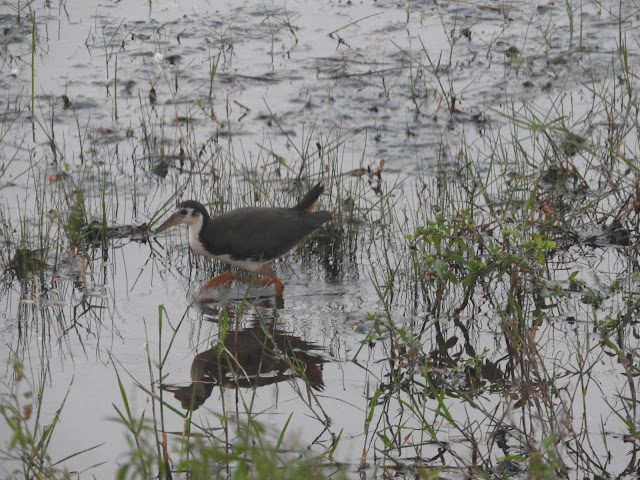

There were more water birds on the other side, including a little egret, sandpiper, redshank and a white-breasted water hen.
'We'll see a lot more in the actual island forests,' Mama told me. 'This is just a partial habitat. It must be drying up in the early summers or during low tides. I can tell from the cracking of the soil.'
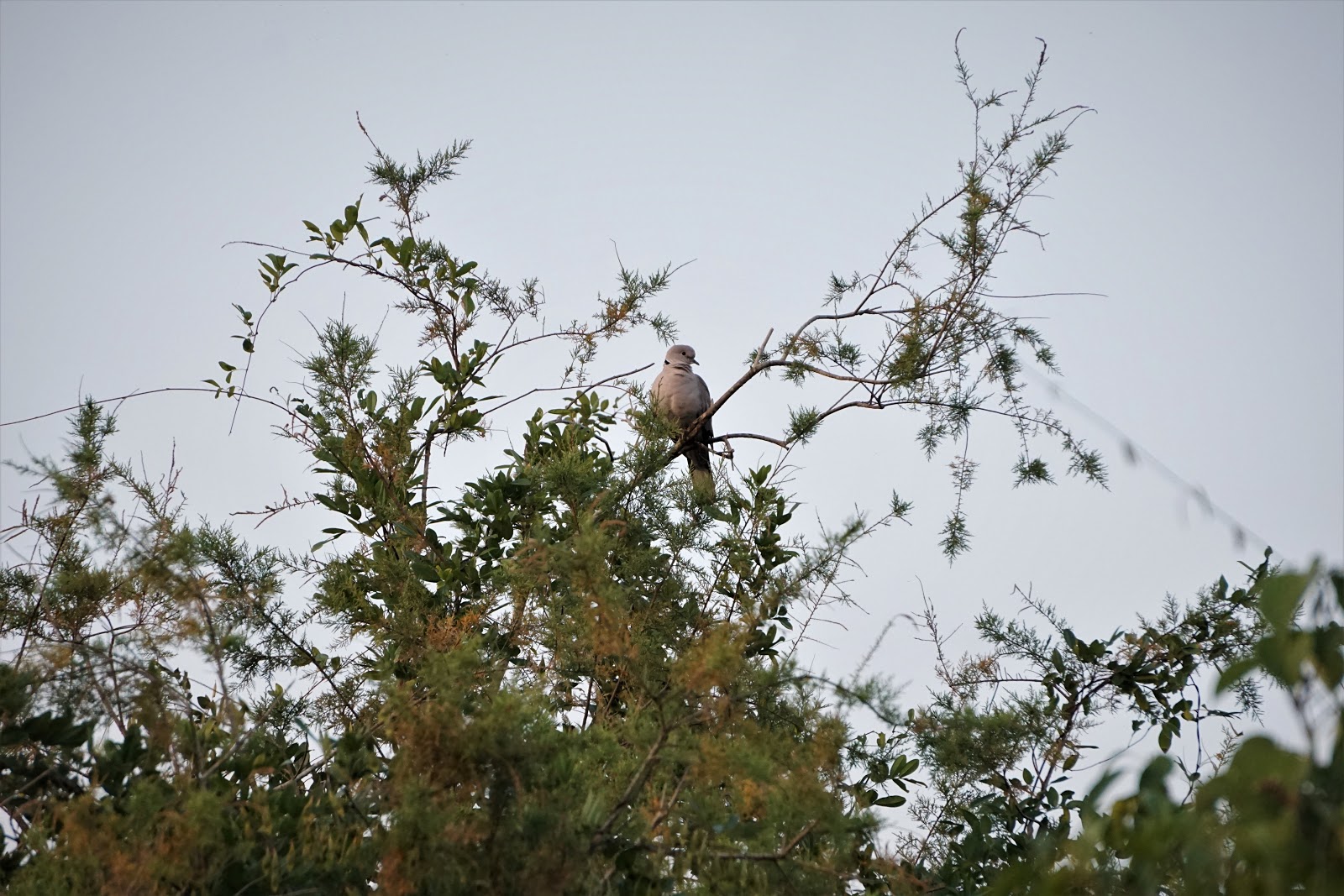
We walked towards the end without much sightings, apart from a dove, pond heron, treepie and possibly a purple-rumped sunbird.
We came to a dock of sorts, with a tiny boat that was bringing back villagers from the other side. There were no oars - instead, I saw a thick rope strung across both ends for one of the passengers to pull on.


There were more water birds on the other side, including a little egret, sandpiper, redshank and a white-breasted water hen.

By Lip Kee Yap - originally posted to Flickr as White-breasted Waterhen (Amaurornis phoenicurus), CC BY-SA 2.0, https://commons.wikimedia.org/w/index.php?curid=7626922
The white-breasted waterhen (Amaurornis phoenicurus). They are often seen stepping slowly with their tail cocked upright in open marshes or even drains near busy roads. They are largely crepuscular in activity and during the breeding season, just after the first rains, make loud and repetitive croaking calls. Local names of this bird are often formed by onomatopoeia (based on the sound it makes), for example ruak-ruak in Malay and korawakka in Sinhala; although differently formed local names are also not uncommon, such as "Dahuk" in Bengali (used in Bangladesh and the Bengali-speaking areas of India) and "Dauk" (ডাউক) in Assamese.
They landed on our side, and walked off towards Gupti; we joined them. There were schoolchildren and mothers and even cyclists, all coming from that tiny boat, like a clown car. They smiled at us as we waved, and one kid stared at us in fascination. The clouds seemed to float with us too, and we all strolled back along the same road; passengers from one dock to the next.


Chapter - 34 : Golden
The sky took all our attention now; a swirling mosaic of clouds, darkening hues and the dimming sun. There was another village, nested between the two patches of forests we had been walking perpendicular to. I ambled there for a while, looking at storks flying overhead and some perched on the tallest tree for miles around.


There was a tiny bund of sorts, and two swifts were chasing each other, weaving in and out of hollow tree trunks, branches and even among us. The light bounced off of them, making it part of the play; a twilight theatre of black and gold.

By Chitrashanker - Own work, CC BY-SA 4.0, https://commons.wikimedia.org/w/index.php?curid=57213938
The black-hooded oriole (Oriolus xanthornus). It is a bird of open woodland and cultivation. Its food is insects and fruit, especially figs, found in the tree canopies where they spend much of their time. The black hooded oriole lives in common contact with humans in rural and urban India. A folk tale from Bengal has it that an unfortunate girl of a merchant family was tortured by her mother-in-law. Troubled by various incidents she smeared herself with turmeric paste and covered herself with a sooty earthen pot and killed herself. A goddess resurrected her as a black hooded oriole and a Bengali name for the bird is "benebou" or merchant's wife while another name is "haldi pakhi" or turmeric bird.


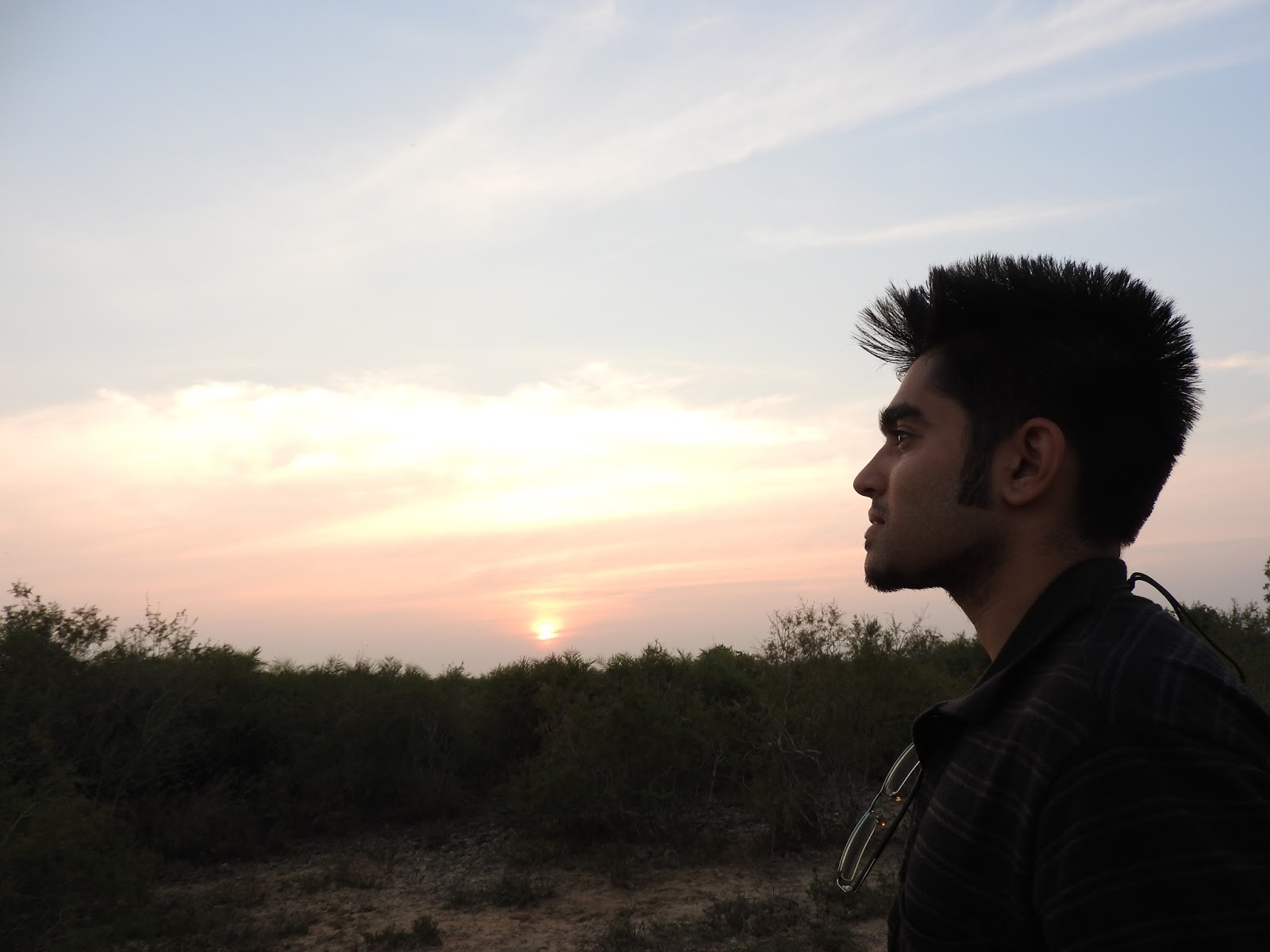
The villagers were gone. We stayed back, waiting until the sun had left, taking all its golden light with it.
To the vanishing horizon, I have chased the day,
Yet when I face the sun, I have nothing to say,
I still hear this lament from the darkening sky,
Where were you going when I was saying goodbye?
I still don't remember what I used to believe,
For my thoughts are muddled by the clouds that won't leave,
But I run faster than anyone to keep them away,
To the vanishing horizon, I have chased the day.
I still don't believe what I used to remember,
All I recall is the cold, dark December,
But on the edge of tomorrow, I saw summer today,
Yet when I face the sun, I have nothing to say.
All those journeys - did they count for none?
Why did you run faster than everyone?
Did you chase down infinity only to fall shy?
I still hear this lament from the darkening sky.
Now I'm standing at the precipice with nothing but a smile,
But the sky I was chasing has been gone for a while,
And she's left nothing but a question and a sigh,
Where were you going when I was saying goodbye?



Chapter - 35 : Light
We went back to the guest house, tired, yet excited for tomorrow's visit to Dangmal and the inner mangrove forests. Night arrived fast, and the sky was inky black before we reached our abode.
'Dinner is ready,' our Hannibal Lecter materialized and told us as we were making our way up the stairs. 'Fish, prawns, rice, brinjal and roshogulla. Please Grace the table.'
I made a quick U-turn and proceeded directly to dinner, while my parents and Uncle-Aunty changed into warmer clothes.
Our landlord served us very hospitably, even asking for feedback regarding the taste and variety of the cuisines. We all mumbled our approvals, focusing more on devouring the food than rating it - although that was a rating in itself.
We got to asking him about the tourism in this area, and he told us this was the edge of the popular time of visit, so we would get peace and quiet and still see the major attractions. However, boat services became more scarce in such times, and we were lucky to have gotten a booking.
'You might get clouds tomorrow,' he said, slightly dismally. 'On overcast days the birds tend to stay home and the crocodiles remain underwater. But the bright side is your trip will be easier.'
Mama looked at Papa with slight alarm. Damn the heat, they wanted to see whatever Bhitarkanika Sanctuary had to offer. Papa said in his usual ascetic manner, 'We'll see what we see. Let's not get despondent about what we cannot control.'
'We'll get up early for the birds,' Mama decided. 'Let's put all efforts from our side. We'll catch the first boat that goes to Dangmal.'
We wrapped up quickly and decided to sleep, even though it was just 9 pm. I'd gotten a room of my own because there was no facility for extra beds in one. Mama handed me my pillow. 'Get up at five,' she instructed. 'Sleep well, ma Cherie,' she said sweetly. 'Don't let the full moon bite.'
I smiled and collapsed on my bed. The moon was shining right onto my face, and there were no shutters - only mosquito netting. I stared out at the black and white nightscape; sleep was going to be difficult.

By Shantanu Kuveskar - Own work, CC BY-SA 4.0, https://commons.wikimedia.org/w/index.php?curid=37724453
The oriental magpie-robin (Copsychus saularis) - left, male; right, female. They are distinctive black and white birds with a long tail that is held upright as they forage on the ground or perch conspicuously. They are particularly well known for their songs and were once popular as cagebirds. It is the national bird of Bangladesh, where it is known as the doyel or doel (Bengali: দোয়েল). It is a widely used symbol there, appearing on currency notes, and a landmark in the city of Dhaka is named as the Doyel Chattar (meaning: Doyel Square). In Sri Lanka this bird is called Polkichcha.
Silent night, holy night, I hummed silently, hoping to sing myself to sleep. The moon rose until it was beyond my sight, and the moonlight had exiled me from its shroud. Sleep in heavenly peace, I hummed the last line, and went to my dreams as the moon said goodbye.
Photos, courtesy of Razi Abdi and Rupa Abdi.
Rupa Abdi's Blog: https://travelnaama471249025.wordpress.com/
Anjana's Blog: https://anjlifeexperiences.wordpress.com
Vedant's YouTube Channel: https://www.youtube.com/channel/UC_-wTP-OKAF6HskDOqSeREw
Vedant's Instagram Page: https://www.instagram.com/vedantsapra/
Rupa Abdi's Blog: https://travelnaama471249025.wordpress.com/
Anjana's Blog: https://anjlifeexperiences.wordpress.com
Vedant's YouTube Channel: https://www.youtube.com/channel/UC_-wTP-OKAF6HskDOqSeREw
Vedant's Instagram Page: https://www.instagram.com/vedantsapra/


